We often borrow words from nature to describe how we feel. We talk about feeling grounded, getting stuck, or going with the flow.
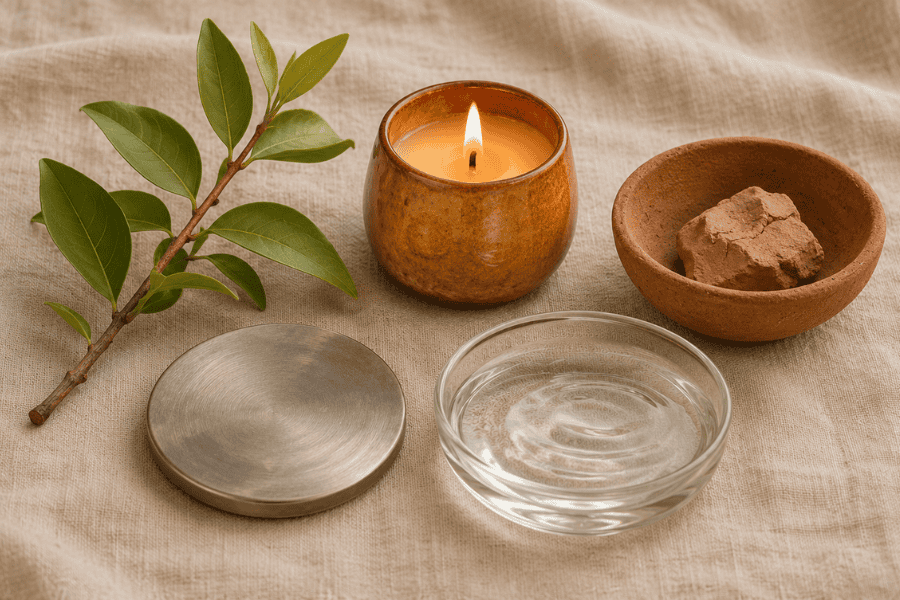
Wood, Fire, Earth, Metal, and Water are the Five Elements in Touch for Health. They form a traditional framework that connects each element with meridians, emotions, colours, sounds, and themes you can reflect on. Here’s how I use the elements in a session and how you can explore them in everyday life.
If the approach is new to you, start with my introduction to Touch for Health.
Understanding Meridians and Muscle Monitoring
In traditional Chinese medicine, meridians are described as pathways through which life energy, called qi, circulates. Touch for Health draws on this map by linking specific muscles to specific meridians.
A basic balance commonly includes 12 main meridians, plus Central and Governing, forming the 14-meridian framework. Central and Governing sit outside the five element groups and are commonly addressed early in a session.
Muscle monitoring involves light pressure while you hold a specific position. The practitioner observes the response, selects a technique, and reassesses.
Although many meridians carry organ names, a muscle response does not measure that organ’s health. Meridians are a traditional framework, distinct from anatomical structures such as nerves and blood vessels.
What Are the Five Elements in Touch for Health

Wood
Wood brings to mind a tree reaching toward light while remaining flexible enough to bend with the wind.
Its themes include planning, decisions, confidence, anger, frustration, and resentment. Wood metaphors may feel relevant when you want to move forward but feel restricted by circumstances or expectations.
“Where do I feel stuck, and how could greater flexibility help?”
Anger can invite attention to an unmet need or boundary. The aim is to understand the experience without judging it.
Possible goal “I move forward with confidence and flexibility.”

Fire
Fire represents enthusiasm, affection, communication, and meaningful connection.
In this framework, Fire includes the Heart, Small Intestine, Pericardium (called Circulation-Sex in some Touch for Health materials), and Triple Warmer meridians. Traditional emotional associations include joy, love, and hate.
Fire themes may open a conversation about enjoyment, relationships, emotional expression, or feeling stretched by social demands.
“What brings me joy, and am I making room for it?”
Possible goal “I welcome joy and communicate with ease.”

Earth
Earth represents stability and the relationship between giving and receiving care.
Its themes include empathy, sympathy, worry, nourishment, and support. They may resonate with someone who carries many responsibilities while overlooking their own needs.
“Am I allowing myself to receive the support I give to others?”
Nourishment includes food and rest, as well as companionship, reassurance, and time for yourself.
Possible goal “I feel grounded and allow myself to receive support.”

Metal
Metal brings up themes of structure, noticing what matters, and letting go of what no longer fits.
Its emotional associations include grief, guilt, and regret. These themes may become meaningful during loss, transition, or a period of reassessing priorities.
“What matters most to me, and where would a clearer boundary help?”
Letting go is personal. Grief deserves compassion and does not follow a required timetable.
Possible goal “I honour what matters and allow change at my own pace.”

Water
Water can be still, move around obstacles, or gradually find a new path.
Its themes include fear, anxiety, security, trust, and resilience. Water metaphors may feel relevant during uncertainty or when someone needs more support and rest.
“What would help me feel secure enough to take my next step?”
Courage can mean acknowledging fear and taking a manageable step with support.
Possible goal “I meet change with courage and flexibility.”
How the Elements Work Together
The five elements form an interconnected model with two main cycles.
Nourishment in the Shen Cycle
The Shen cycle describes how each element traditionally nourishes the next.
Wood → Fire → Earth → Metal → Water → Wood
It is often called the mother–daughter relationship, with each element traditionally described as nourishing the next. Wood fuels Fire, for example, and Fire leaves ash that contributes to Earth.
Practitioners use this relationship to guide their choices during a balance. It can also prompt a question for reflection. “What supports the change I want to make?”
Regulation in the Ko Cycle
The Ko cycle describes how each element traditionally regulates another. It is sometimes called the grandmother–granddaughter relationship.
Wood → Earth → Water → Fire → Metal → Wood
Understanding Balancing Terms and Patterns
Within Touch for Health, an inhibited or “unlocking” muscle response may be described as under-energy. Traditional alarm-point procedures may also be used when considering over-energy.
Tonification describes a technique intended to support an under-energy pattern. In this framework, sedation refers to a technique intended to calm an over-energy pattern.
These terms belong to the practice framework and do not establish that an organ is underactive or overactive.
Practitioners may also use a meridian wheel, which arranges the meridians in a traditional 24-hour sequence. Patterns with names like beaver dam, triangle, square, and spokes help practitioners organise a balance.
Goals, Metaphors, Colours, and Sounds
I start by asking one question.
“What would you like to improve?”
Your goal might involve movement, relaxation, confidence, or an upcoming event. Together, we find wording that feels right to you.
“I approach this conversation calmly and confidently.”
Metaphors offer another way to explore the goal. Expressions such as “carrying too much” or “holding myself back” may prompt useful reflection. You decide what fits your experience.
Colour visualization and sound are optional tools. You may be invited to imagine a colour, notice its personal associations, or explore comfortable expression through sound. You do not need to shout, laugh, cry, or make an emotion appear.
Emotional Stress Release and Other Techniques
Emotional Stress Release (ESR) involves light contact with designated forehead points while reflecting on a manageable concern. It may include mentally rehearsing an upcoming event and considering the support or response you would like.
You do not need to revisit difficult memories or disclose personal details. Reflection should remain comfortable and voluntary.
Other techniques may include designated spinal, neurolymphatic, and neurovascular reflex points; meridian tracing; muscle attachment techniques; spindle and Golgi techniques; acupressure holding points; and gentle movement or figure-eight patterns.
These are names for techniques taught in Touch for Health. Their names alone do not establish effects on circulation, lymphatic drainage, or nerve function.
What Happens During a Touch for Health Session
We begin by discussing your goals, what you’re comfortable with, and any injuries or movement limitations. I’ll ask for your consent before we start. You may choose to rate your stress, discomfort, or confidence as a starting point.
Muscle monitoring guides the traditional balancing process. You may combine physical techniques with five-element reflection, colour visualization, or ESR, depending on your preferences.
We then revisit your goal and discuss what you notice. Your feedback matters, and outcomes vary.
If you’re curious about trying it, you can read more about my Touch for Health consultations in Langley.
What Is Touch for Health? 10 Questions People Ask Before Their First Session
Bringing the Elements into Everyday Life
Here are five questions you can use to reflect on the elements in everyday life.
- Wood Where would flexibility help me move forward?
- Fire What brings enjoyment and connection?
- Earth What nourishment or support do I need?
- Metal What matters, and where do I need a boundary?
- Water What would help me meet uncertainty with confidence?
Frequently Asked Questions About Touch for Health
Do I have one main element?
You do not need to be assigned a fixed element. All five belong to the framework, and a session focuses on your current goals and experience.
Does a meridian response mean something is wrong with an organ?
No. Meridian names belong to the traditional map. Muscle monitoring cannot diagnose disease or measure the health of the named organ.
What are Central and Governing?
They are two meridians included in the basic 14-meridian balance. They sit outside the five element groups and are commonly addressed early in the session.
Can muscle monitoring identify a hidden emotion?
It cannot reliably identify an emotion or reveal a past experience. Element themes provide reflection prompts; your own account takes priority.
How do the Shen and Ko cycles differ?
The Shen cycle describes nourishing relationships between elements. The Ko cycle describes regulating relationships. Both help organize traditional balancing approaches.
Why discuss emotions when my concern is physical?
Your experiences and responsibilities may add useful context to your goal. Exploring them does not establish that an emotion caused a physical symptom.
Must I discuss trauma or difficult memories?
You choose what to share and can decline any conversation or technique. We can work with a current goal you feel comfortable discussing.
Why include colours and sounds?
They offer optional ways to explore associations and expression. Some people prefer visualization; others prefer conversation or physical techniques.
What might I notice afterward?
At the end, we revisit your goal and talk about anything you noticed. People describe different experiences, including little immediate difference.
How do we decide whether to book another session?
We review your goal, your experience, and whether you found the approach useful. Follow-up should have a clear purpose that makes sense to you.
When you’re ready, view Langley appointment options.