
The Power of Sole Water:
Reclaiming Cellular Balance with Pink Himalayan Salt
In the world of wellness rituals, sole water has been quietly gaining steam, and for good reason. At its core, this is a simple yet potent practice: dissolve high-quality Himalayan salt in water to create a saturated brine, then add a small amount of that brine into your daily drinking water. While it may seem minimalist, many believe it offers meaningful benefits, from cellular hydration to energetic balance, kidney support to mineral nourishment.
It’s important to note that Sole Water is NOT the same as the trending “pink salt in water” tip online; sole is a controlled, pre-made saturated brine, while the social version is random amounts added directly to water.
What Is Sole Water?
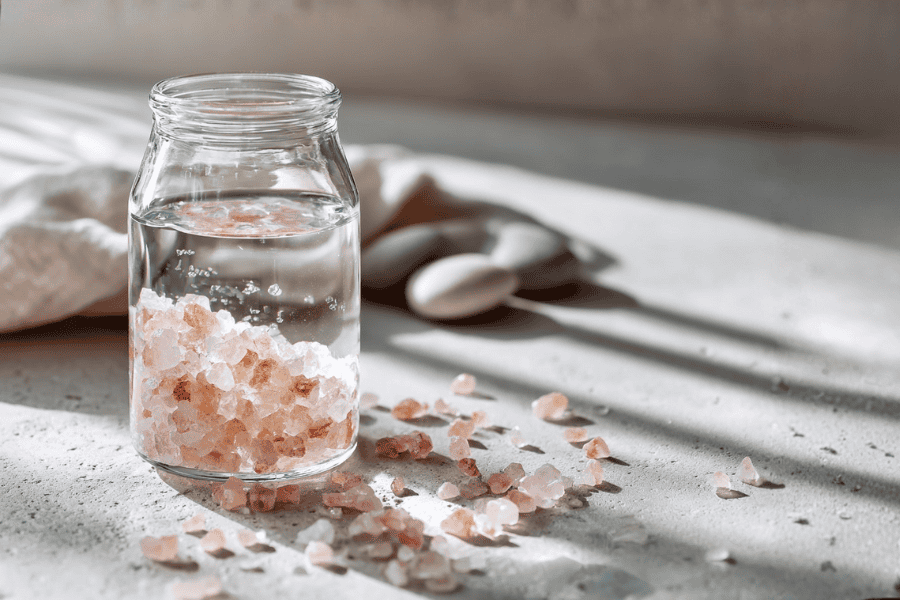
“Sole” (pronounced so-LAY) is simply water that has been fully saturated with unrefined Pink Himalayan salt.
How it’s made:
- Fill a glass jar ¼ full of coarse pink Himalayan salt.
- Add filtered (or distilled) water to the top, seal, shake, and rest 12–24 hours.
- When salt crystals remain at the bottom, it has reached saturation.
- Common practice is taking one teaspoon of the saturated brine and adding it into a glass of water.
Commonly Reported Benefits of Sole Water
1. Mineral Replenishment & Electrolyte Support
2. Cellular Hydration & Osmotic Balance
3. Kidney Support & Gentle Detox Support
4. Energy, Digestion & Sleep
5. Energetic / Ionic Balance
The Science Side: What We Know & Don’t Know
While these benefits are widely shared in holistic communities, scientific research is limited. Some mineral benefits are plausible, but more evidence is needed.
Concerns from experts include:
- Too much sodium intake can stress kidneys and cardiovascular function.
- Many trace minerals in Himalayan salt are present only in tiny amounts.
Safety, Tips & Best Practices
- Use high-quality Himalayan salt
- Use a glass jar, not metal
- Limit dose to about 1 teaspoon of brine per glass of water
- Be mindful of sodium in other foods
- Listen to your body, if your energy dips or you feel bloated, pull back
What This Means For Your Health
Sole water offers an interesting meeting point between ancient mineral traditions and modern wellness curiosity. Even if some claims aren’t highly studied, the ritual itself, slow, intentional, mineral-focused hydration, can feel supportive for many.
As with any natural support, the key is listening to your body, being intentional, and pairing this practice with whole food nutrition, rest, and balanced lifestyle habits.
Get A Balanced Perspective
If you’re curious whether your mineral balance, hydration, or energy flow patterns may be affecting how you feel, bioenergetic testing can help identify where your system needs support and correction.
Book a Bioenergetic Scan at Pure Healing Homeopathy (serving Langley and Surrey) and see how your body is communicating from the inside out.
Frequently Asked Questions
1. What exactly is Sole Water?
Sole Water is a mineral-rich brine made by dissolving Himalayan salt in water until fully saturated. You add about one teaspoon of this brine to your drinking water to naturally support hydration and trace mineral intake.
2. How do I make Sole Water at home?
Fill a glass jar ¼ full with Himalayan salt, add filtered water, seal, shake, and let sit 12–24 hours. When salt remains at the bottom, it’s saturated. Add one teaspoon of the brine to a glass of water daily.
3. What are the main benefits of Sole Water?
People report better hydration, improved digestion, more stable energy, mineral support, and a gentle sense of internal balance. Because Sole contains electrolytes, water can be absorbed into cells more efficiently.
4. Can Sole Water help support kidney detoxification?
Many believe Sole Water supports gentle detox by helping the kidneys flush waste and maintain mineral balance. It should be used mindfully and not as a primary detox or replacement for medical care.
5. Is it safe to drink Sole Water daily?
Yes, when used in moderation. One teaspoon of saturated brine per glass of water is common. People with high blood pressure, kidney issues, or sodium sensitivity should check with their practitioner first.
6. What minerals are in Himalayan Salt?
Himalayan salt contains trace minerals such as magnesium, potassium, calcium, zinc, and iron. These minerals help support muscle function, hydration, nerve signalling, and electrolyte balance.
7. When is the best time to drink Sole Water?
Most people take Sole Water first thing in the morning to support hydration, digestion, and natural mineral balance at the start of the day.
8. Can Sole Water support energy and mood?
Many people report feeling calmer, clearer, and more energized. Balanced electrolytes help support cellular energy production and overall nervous system function.